Unveiling the Potential of Pyrite Powder in Thermal and Electrical Conductive Materials
Release time: 2025-11-11
1. Introduction
1.1 Background
In the field of material science, the demand for low-cost, high-performance thermal and electrical conductive materials has been growing rapidly—especially in electronics, energy storage, and construction industries. Traditional conductive materials like copper foil and graphene, while exhibiting excellent performance, suffer from high production costs and limited scalability, which restricts their application in cost-sensitive scenarios. Pyrite (FeS₂), a widely abundant mineral resource with a global reserve of over 10 billion tons, has emerged as a promising alternative due to its inherent conductive and thermal properties. Research on the thermal and electrical conductivity of pyrite powder is therefore crucial for advancing the development of affordable conductive/thermal materials, addressing the cost bottleneck of traditional options.

1.2 Research Objectives
This paper focuses on systematically analyzing the intrinsic performance characteristics of pyrite powder in terms of thermal and electrical conductivity, exploring the key factors that influence its conductive efficiency, and evaluating its practical application potential in low-to-medium demand scenarios. Additionally, it discusses feasible modification strategies to overcome current limitations, providing a reference for the industrial application of pyrite-based conductive/thermal materials.
2. Pyrite Powder: An Overview
2.1 Chemical Composition and Structure
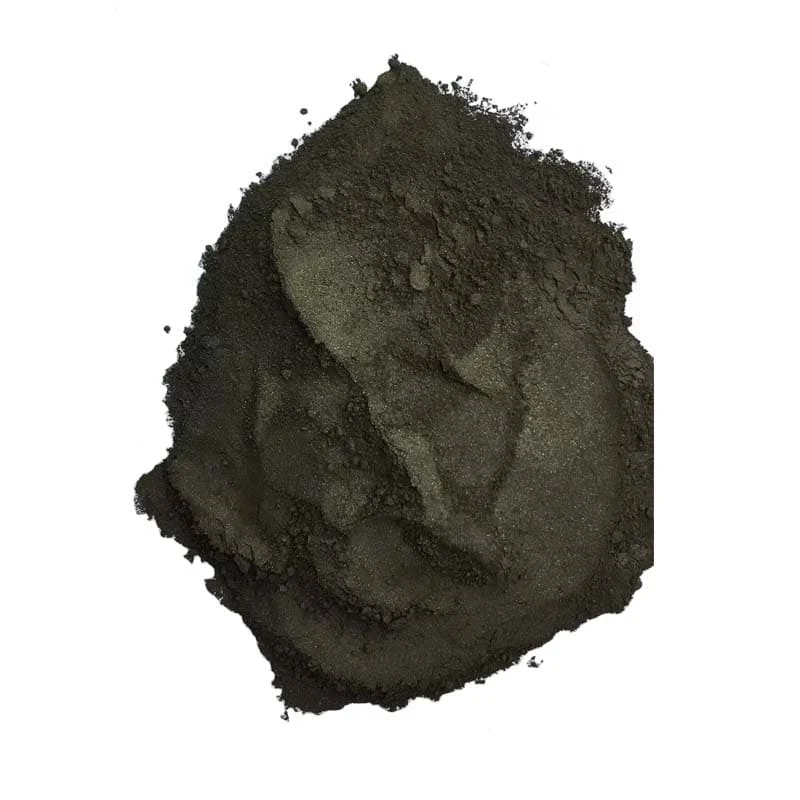
Pyrite powder is primarily composed of iron disulfide (FeS₂), with trace impurities such as arsenic (As), cobalt (Co), and nickel (Ni) depending on its ore source. Its crystal structure adopts a face-centered cubic (FCC) lattice, where each iron atom is surrounded by six sulfur atoms in an octahedral coordination, and each sulfur atom forms a covalent bond with another sulfur atom to form S₂²⁻ dimers. This unique structure plays a critical role in electron and phonon transport: the S₂²⁻ dimers contribute to the material’s semi-metallic properties by enabling electron delocalization, while the regular FCC lattice provides a pathway for phonon propagation—both of which lay the foundation for its thermal and electrical conductivity.
2.2 Physical Properties
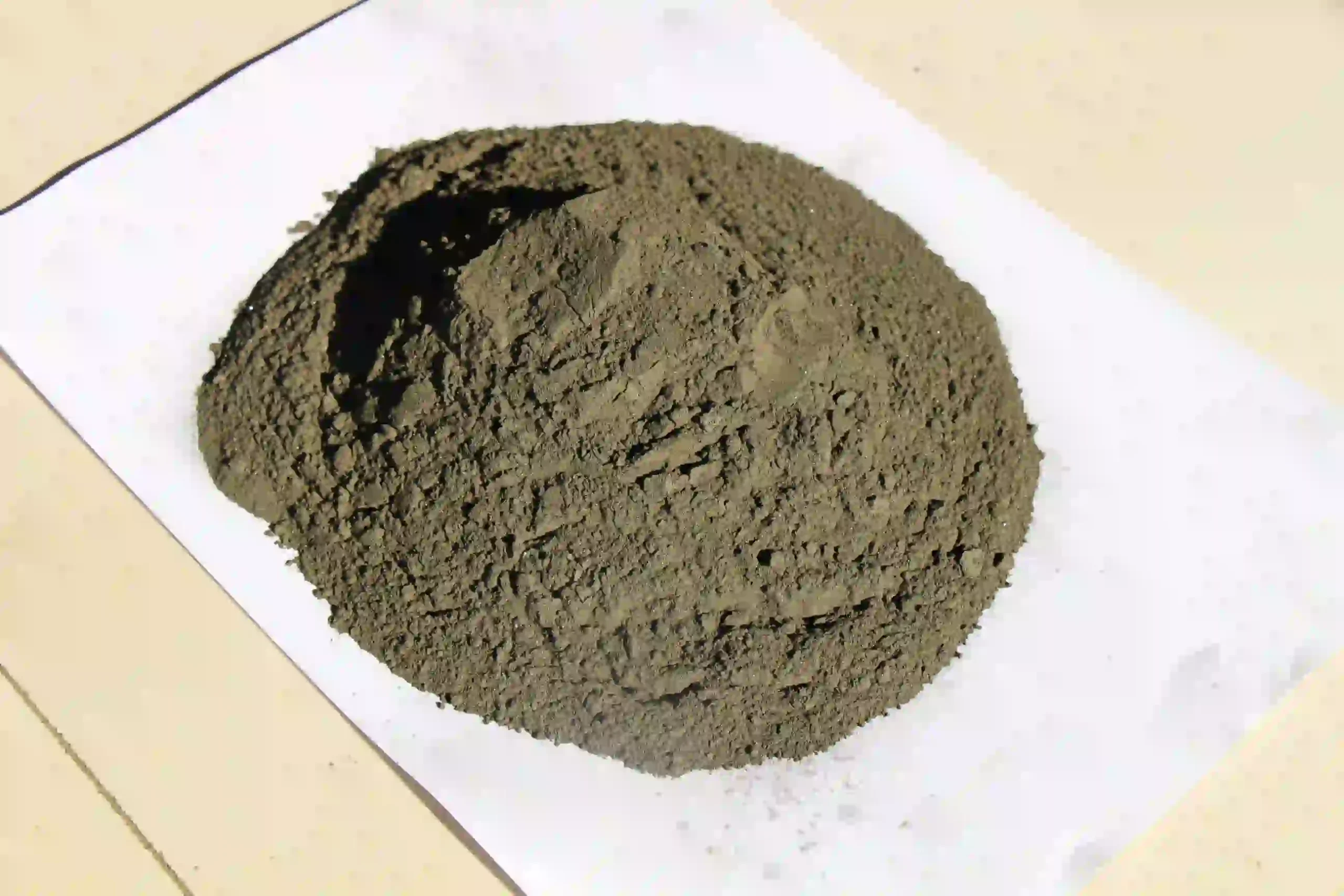
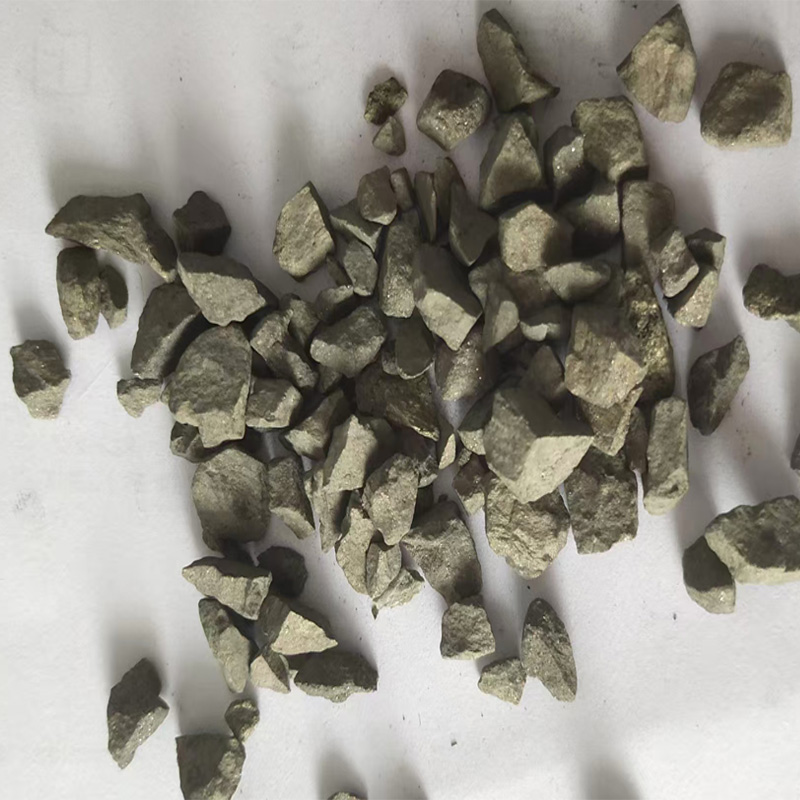
In its powdered form, pyrite typically presents a brass-yellow hue with a metallic luster, and its particle size can be controlled between 1 μm and 100 μm through crushing and grinding processes. Key physical parameters include a density of approximately 5.0 g/cm³ (higher than most polymers, facilitating uniform dispersion in composites) and a Mohs hardness of 6-6.5 (higher than common mineral fillers like talc, ensuring mechanical stability in composite materials under external stress). These physical properties make pyrite powder compatible with various matrix materials, such as epoxy resins and polyethylene, for the fabrication of composite conductive/thermal materials.
3. Thermal Conductivity of Pyrite Powder
3.1 Core Characteristics
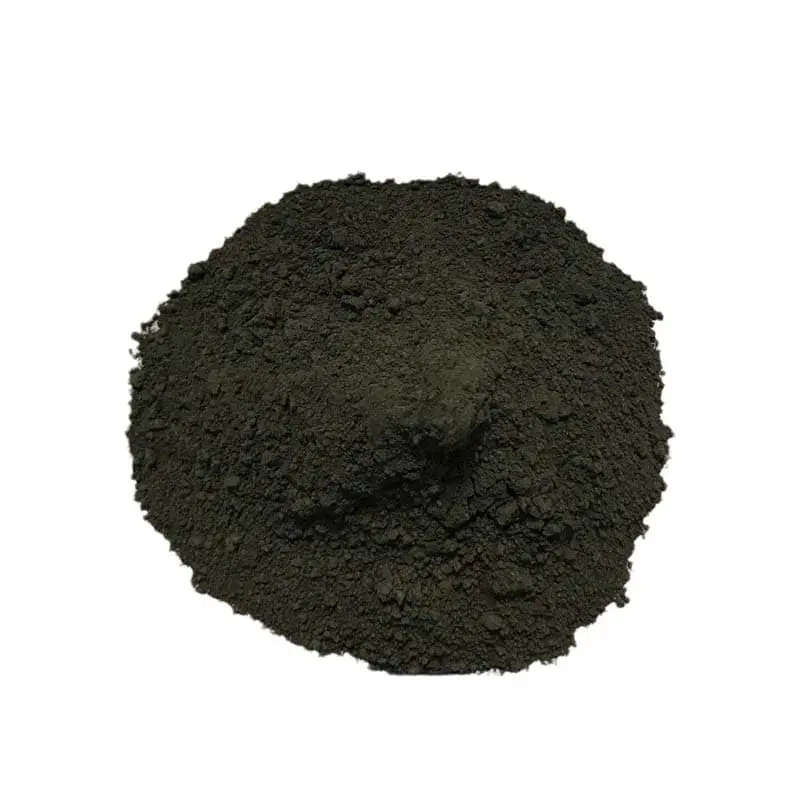
At room temperature (25°C), the thermal conductivity of pure pyrite powder ranges from 3 W/(m·K) to 5 W/(m·K), as measured by the laser flash method—a standard technique for determining the thermal diffusivity of powdered materials. This value is significantly lower than that of traditional metallic thermal conductors (e.g., copper at 401 W/(m·K), aluminum at 237 W/(m·K)) but 15-25 times higher than that of common insulating polymers (e.g., epoxy resin at ~0.2 W/(m·K), polyethylene at ~0.4 W/(m·K)). Notably, the thermal conductivity of pyrite powder exhibits a slight increase with rising temperature (up to 100°C), as phonon scattering is reduced at higher temperatures, but decreases above 100°C due to enhanced lattice vibration.
3.2 Key Influences
Two primary factors affect the thermal conductivity of pyrite powder: particle size and porosity. For particle size, smaller particles (≤5 μm) tend to increase interface resistance between particles, as the increased specific surface area leads to more phonon scattering at particle boundaries—resulting in a 10-15% reduction in thermal conductivity compared to larger particles (20-50 μm). Porosity, on the other hand, is inversely correlated with thermal conductivity: when the porosity of pyrite powder aggregates exceeds 20%, the thermal conductivity drops to below 2 W/(m·K), as air gaps between particles act as thermal insulators. Additionally, impurity content (e.g., >0.5% As) can slightly reduce thermal conductivity by disrupting the regular lattice structure and increasing phonon scattering.
3.3 Application Potential
Given its moderate thermal conductivity, pyrite powder is well-suited for low-to-medium thermal demand scenarios. One typical application is in polymer-based thermal interface materials (TIMs) for LED lighting: when mixed with epoxy resin at a mass fraction of 40-50%, the composite TIM exhibits a thermal conductivity of 1.2-1.8 W/(m·K)—sufficient for dissipating heat from LED chips (which generate temperatures up to 80°C) and preventing overheating. Another potential application is in building insulation materials: blending pyrite powder with polyurethane foam can improve the foam’s thermal conductivity by 30-40% while maintaining its lightweight property, making it suitable for use in energy-efficient building envelopes. However, to compete in high-demand scenarios (e.g., CPU cooling), pyrite powder requires modification to enhance its thermal conductivity—such as surface coating to reduce interface resistance.
4. Electrical Conductivity of Pyrite Powder
4.1 Conductivity Mechanism
The electrical conductivity of pyrite powder originates from the presence of impurity atoms that substitute for lattice sites, a phenomenon known as extrinsic doping. For example, when arsenic (As) atoms replace sulfur (S) atoms in the FeS₂ lattice, each As atom donates one free electron (due to As having five valence electrons compared to S’s six), creating an n-type semiconductor. At room temperature, the resistivity of pyrite powder ranges from 10⁻³ Ω·cm to 10⁻² Ω·cm, corresponding to an electrical conductivity of 100 S/m to 1000 S/m. Unlike metals, the electrical conductivity of pyrite powder increases with temperature, as higher temperatures excite more electrons into the conduction band—though this trend is less pronounced in samples with high impurity content (which already have a high concentration of free electrons).
4.2 Performance Comparison
When compared to common conductive materials, pyrite powder’s electrical conductivity is significantly lower than that of metals (e.g., copper at 5.96×10⁷ S/m, silver at 6.30×10⁷ S/m) but far higher than that of insulating polymers (e.g., epoxy resin at <10⁻¹⁴ S/m) and even some semi-conductive fillers (e.g., carbon black at 10 S/m to 100 S/m). Its key advantage lies in cost: the production cost of pyrite powder is approximately
0.5−1 per kilogram, which is 1/100th the cost of carbon black and 1/1000th the cost of graphene. This cost advantage makes pyrite powder a viable option for applications where high conductivity is not required, but cost control is critical.
4.3 Application Prospects
One of the most promising applications of pyrite powder is in low-cost conductive coatings for anti-static packaging. When mixed with water-based acrylic resins at a mass fraction of 30-40%, the coating exhibits a surface resistance of 10⁶ Ω/sq to 10⁸ Ω/sq—meeting the industry standard for anti-static materials (≤10⁹ Ω/sq) and suitable for packaging electronic components like circuit boards. Another potential application is as an additive in lithium-ion battery electrodes: blending pyrite powder with graphite anode materials at a mass fraction of 5-10% can improve the anode’s electrical conductivity by 20-30%, enhancing the battery’s charge-discharge rate. However, a key challenge is controlling impurity content: high levels of As (>0.3%) can cause irreversible reactions with lithium ions, reducing battery lifespan. Thus, purification of pyrite ore is essential for this application.
5. Modification and Optimization
5.1 Surface Modification
Surface modification is a key strategy to improve the compatibility and conductive efficiency of pyrite powder in composite materials. The most widely used method is coating with silane coupling agents (e.g., 3-aminopropyltriethoxysilane, APTES). The silane molecules form covalent bonds with the hydroxyl groups on the pyrite surface, while the amino groups at the other end react with the functional groups of polymer matrices (e.g., epoxy groups in epoxy resins). This modification reduces the interface resistance between pyrite particles and the polymer matrix by 20-30%, thereby increasing the thermal conductivity of the composite by 15-20% and the electrical conductivity by 10-15%. Additionally, surface coating with titanium dioxide (TiO₂) can enhance the chemical stability of pyrite powder, preventing oxidation in humid environments—an important improvement for long-term application in outdoor scenarios.
5.2 Composite Design
Designing pyrite-based composite materials with a synergistic combination of fillers is another effective way to optimize performance. For thermal conductive composites, blending pyrite powder with low-cost, high-thermal-conductivity fillers like aluminum nitride (AlN) (thermal conductivity: 170 W/(m·K)) at a mass ratio of 3:1 can achieve a composite thermal conductivity of 8-10 W/(m·K)—higher than that of pyrite-only composites (1.2-1.8 W/(m·K)) and more cost-effective than AlN-only composites. For electrical conductive composites, mixing pyrite powder with carbon nanotubes (CNTs) (electrical conductivity: 10⁶ S/m) at a mass ratio of 10:1 can create a “conductive network” in the polymer matrix, increasing the composite’s electrical conductivity to 5000-8000 S/m—suitable for applications like flexible conductive films. The core advantage of this composite design is balancing performance and cost: it leverages the high conductivity of expensive fillers while using pyrite powder to reduce overall material costs.
6. Challenges and Future Directions
6.1 Current Challenges
Despite its potential, pyrite powder faces three main challenges in practical application. First, impurity content varies with ore source: for example, pyrite from coal mines may contain up to 1% As, which degrades both thermal and electrical conductivity and causes environmental concerns during processing. Second, poor dispersion in polymer matrices: due to its high density, pyrite powder tends to settle in low-viscosity polymers (e.g., liquid epoxy), leading to uneven conductivity in the composite. Third, low oxidation resistance: pyrite powder oxidizes to form iron oxides (e.g., Fe₂O₃) and sulfur dioxide (SO₂) at temperatures above 200°C, reducing its conductive performance over time.
6.2 Future Focus
To unlock the full potential of pyrite powder, future research should focus on three directions. First, developing efficient purification techniques: hydrometallurgical processes (e.g., leaching with sulfuric acid) can reduce impurity content to below 0.1%, improving conductive performance while minimizing environmental impact. Second, optimizing dispersion methods: using ultrasonic dispersion or adding dispersants (e.g., sodium polyacrylate) can prevent particle aggregation, ensuring uniform distribution of pyrite powder in polymer matrices. Third, exploring high-temperature stabilization: coating pyrite powder with silicon carbide (SiC) or aluminum oxide (Al₂O₃) can form a protective layer that resists oxidation at temperatures up to 500°C, expanding its application in high-temperature scenarios like automotive electronics.
7. Conclusion
Pyrite powder exhibits moderate thermal conductivity (3-5 W/(m·K)) and electrical conductivity (100-1000 S/m), with a unique advantage in cost-effectiveness due to its abundant reserves and low production cost. Its performance characteristics make it particularly suitable for low-to-medium demand applications, such as LED thermal interface materials, anti-static coatings, and battery electrode additives. However, its practical application is limited by impurity content, poor dispersion, and low oxidation resistance. Through targeted modification strategies—including surface coating, composite design, and purification—these limitations can be effectively addressed. In summary, pyrite powder represents a promising low-cost alternative to traditional conductive/thermal materials, and further research on optimization and scaling will significantly expand its industrial value in material science, contributing to the development of affordable and sustainable conductive/thermal materials.