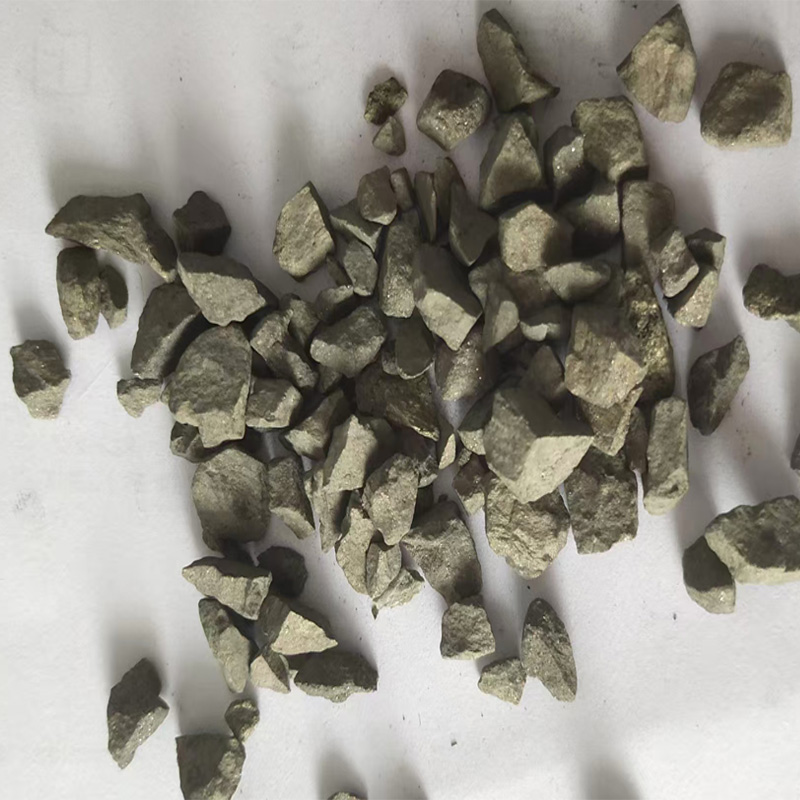
Pyrite Powder for Friction Materials – Which Mesh Size is Best?
Release time: 2025-11-28
Table of Contents
Pyrite powder, also known as iron sulfide powder, plays a crucial role in the production of friction materials such as brake pads, clutch plates, and brake linings. As a functional additive, it provides a stable coefficient of friction, heat resistance, reduced wear, and contributes to improved overall mechanical performance during braking. However, one of the most frequently asked questions by manufacturers is: which mesh size of pyrite powder is best suited for friction materials?
Choosing the right particle size directly impacts surface contact, bonding strength, and the stability of the final product. Binuo will explore the ideal mesh size range, performance characteristics, and why high-quality pyrite powder is essential for friction material formulations.
Applications of Pyrite Powder in Friction Materials
Pyrite is favored for its thermal stability and moderate hardness, which improves wear resistance while maintaining predictable friction performance. Heat is generated during braking; appropriately fine pyrite powder helps absorb heat, reduce dust generation, and extend the lifespan of brake pads.
Compared to other mineral fillers, reliable and non-toxic pyrite powder is more cost-effective and suitable for large-scale production. It is widely used in automotive, industrial equipment, and machinery braking systems.
Choosing the Right Mesh Size
Mesh size refers to the fineness of the particles. For friction materials, coarse or fine pyrite powder can be used depending on the product formulation requirements.
Recommended Mesh Size Range:
| Mesh Size | Feature | Application in Friction Material |
| 150–200 mesh | Slightly coarse | Used in base formulations for structural enhancement |
| 200–300 mesh | Moderate fineness | Most commonly used, balances strength & friction stability |
| 325 mesh and above | Fine grade | Improves surface contact, suitable for high-precision products |
Among these, 200-325 mesh pyrite powder is considered the most popular choice. It has a uniform distribution, effectively bonds with the resin matrix, and provides stable wear resistance during high-speed braking.
For automotive disc brakes or heavy-duty equipment, many manufacturers prefer using fine mesh pyrite powder (300-325 mesh) to reduce noise and ensure consistent braking efficiency.
Purity and Stability are Crucial
While mesh size is important, the quality and consistency of the raw materials cannot be overlooked. For the manufacture of friction materials, it is recommended to choose high-purity, compositionally stable pyrite powder and control its iron and sulfur content. Purity affects thermal response performance, while low impurity content ensures better mixing and fewer production defects.
High-standard suppliers should provide:
Product Analysis Certificates (COA) and Material Safety Data Sheets (MSDS) for reference
Stable sulfur and iron content
Low moisture content and controlled impurity levels
Consistent particle size distribution
Customization options available based on industrial needs
Choosing high-quality pyrite powder for friction materials helps improve braking smoothness and extend product lifespan.
Storage, Packaging, and Safety Precautions
Even high-quality materials can deteriorate if stored improperly. Pyrite powder should be stored in a dry environment and in sealed packaging to prevent moisture absorption. Many factories prefer packaging with an inner PE bag and an outer woven bag to ensure safe transportation. For export or large orders, pallet packaging is a common option to reduce damage.
Reliable suppliers typically provide non-toxic, environmentally friendly pyrite powder suitable for long-term industrial applications.
Conclusion
The optimal particle size for pyrite powder used in friction materials is typically 200-325 mesh, as it provides the best balance of dispersibility, thermal stability, and friction performance. Finer particle sizes are particularly suitable for high-performance brake pads and precision components.
When selecting pyrite powder, manufacturers should consider particle size, purity, moisture control, packaging, and supplier reliability to ensure stable production yields.
If you are looking for high-quality, stable pyrite powder for friction material applications, we offer customized particle sizes, bulk supply, and technical support. Please contact Bainuo for samples or product specifications.