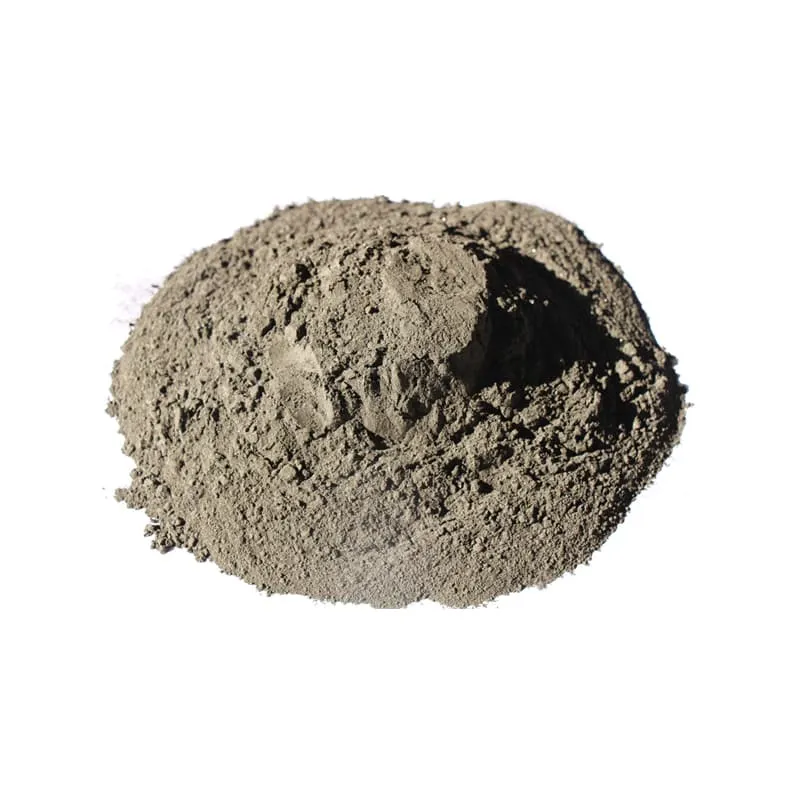
環境ガバナンスにおける黄鉄鉱粉末の応用技術
Release time: 2026-01-29
I. Basic Application in Water Treatment: Removal of Micro-pollutants from Drinking Water
1. Adsorption-Fixation Technology for Trace Heavy Metal Ions
Pyrite powder achieves efficient removal of heavy metals through surface active sites and lattice defects. For Cr(VI), it is first reduced to low-toxicity Cr(III) by Fe²⁺, then forms hydroxide co-precipitation; for As(V), it forms iron-arsenic composite oxides through adsorption by Fe(OH)₃ colloids on the surface, and S²⁻ can react with As(III) to generate As₂S₃ precipitation, with a removal rate exceeding 99%. In application, it is made into filter columns or mixed filter media, with an empty bed contact time of 10~20 minutes and pH adjusted to 6.0~7.5, enabling the heavy metal concentration in the effluent to be reduced to below 0.01 mg/L.
2. Removal of Natural Organic Matter and Disinfection By-product Precursors
Fe²⁺ reacts with dissolved oxygen to generate ·OH, which oxidizes and decomposes macromolecular organic matter into small molecules. The remaining organic matter is adsorbed through the porous structure of 200~300 mesh powder, reducing the formation of chlorine disinfection by-products, with a by-product removal rate of 40%~60%.
II. Core Application Technologies in Wastewater Treatment
1. Sulfidation-Reduction Co-precipitation Technology for Reductive Heavy Metal Wastewater
Suitable for electroplating and metallurgical wastewater. Under acidic conditions (pH=2~5), pyrite dissociates to release Fe²⁺ and S²⁻: Fe²⁺ reduces high-valent heavy metals, and S²⁻ forms highly stable sulfide precipitation with heavy metals. The dosage is 1.2~1.5 times the theoretical amount. After stirring and reacting for 30~60 minutes, adjust the pH to 7.0~8.0 and add PAM for coagulation assistance, ensuring the effluent meets the electroplating wastewater discharge standard.
2. Catalytic Advanced Oxidation Technology for Refractory Organic Wastewater
(1) Pyrite-Hydrogen Peroxide Catalytic Oxidation
Adjust the pH to 3.0~4.0, add 1~5 g/L of 200~300 mesh pyrite and 5~20 mL/L of 30% H₂O₂, react for 2~4 hours. The COD removal rate reaches 60%~85%, B/C can be increased to above 0.3, and the iron sludge production is reduced by more than 50% compared with the traditional Fenton method.
(2) Pyrite-Ozone Catalytic Oxidation
Fe²⁺ catalyzes ozone to generate free radicals, improving the degradation efficiency of organic matter. Suitable for decolorization of printing and dyeing wastewater, the decolorization rate of azo dyes reaches 99%, the COD removal rate is 50%~70%, and the reaction time is 30~60 minutes.
3. Reductive Denitrification Technology for Nitrate/Nitrite Wastewater
Under acidic conditions, Fe²⁺ directly reduces NO₃⁻-N to N₂; alternatively, denitrifying bacteria use pyrite as an electron donor for denitrification in an anaerobic environment without additional carbon source addition. A fixed-bed reactor is adopted with an HRT of 8~12 hours, and the denitrification rate is 80%~95%.
4. In-situ Neutralization-Immobilization Treatment of Acid Mine Drainage (AMD)
Pyrite reacts with H⁺ in wastewater to achieve in-situ neutralization, and the dissociated products form precipitation with heavy metals. The HRT of the packed bed is controlled at 6~10 hours, the pH of the effluent rises to 6.0~7.0, the heavy metal removal rate exceeds 95%, and there is no need for frequent filler replacement.
5. Decomplexation-Removal Technology for Complex Heavy Metals in Electroplating Wastewater
Adjust the pH to 2.0~3.0, add 3~8 g/L pyrite, stir and react for 60~90 minutes, with a decomplexation rate exceeding 90%. Subsequent neutralization and precipitation result in a complex heavy metal removal rate of more than 98%.
III. Extended Applications in Environmental Pollution Control
1. In-situ Immobilization Remediation of Heavy Metal-Contaminated Soil
Pyrite is added at 0.5%~2% of the soil dry weight. Under anaerobic conditions, it reduces Cr(VI) and generates sulfide precipitation, reducing the bioavailability of heavy metals without damaging the soil structure or causing secondary pollution.
2. Purification of Low-Concentration SO₂ and NOₓ in the Atmosphere
Loaded on carriers to make adsorptive catalytic materials, realizing integrated desulfurization and denitrification. SO₂ is adsorbed and converted, NOₓ is reduced to N₂, with a purification efficiency of 60%~80%, suitable for low-concentration industrial exhaust gas.
3. Treatment of Solid Waste Leachate
It is mixed into the anti-seepage layer of landfills or directly added to leachate collection pools. Heavy metals are removed through sulfidation precipitation and neutralization, and the treated leachate meets the standard, preventing pollution to soil and groundwater.
IV. Key Process Parameters and Optimization
200~300 mesh powder is preferred; acidic conditions are suitable for reduction and sulfidation reactions, while neutral conditions are dominated by adsorption. The dosage is 1.2~1.5 times the theoretical amount; reductive reactions require anaerobiosis, and oxidation reactions require aeration and stirring. Used pyrite can be regenerated by pickling + reduction and reused 3~5 times.
V. Limitations, Solutions and Development Trends
Natural pyrite has a slow reaction rate, which can be improved by modification; alkaline wastewater requires pretreatment or compounding into composite agents; a small amount of iron sludge can be recycled. In the future, it will develop towards modified composite materials, integrated processes and product resource utilization, expanding application scenarios such as groundwater remediation and air purification.