Applications of Pyrite Powder in Electronic Devices: A Discussion on Application Cases and Technical Advantages in Electronic Components, Semiconductors and Magnetic Storage Devices
Release time: 2025-12-08
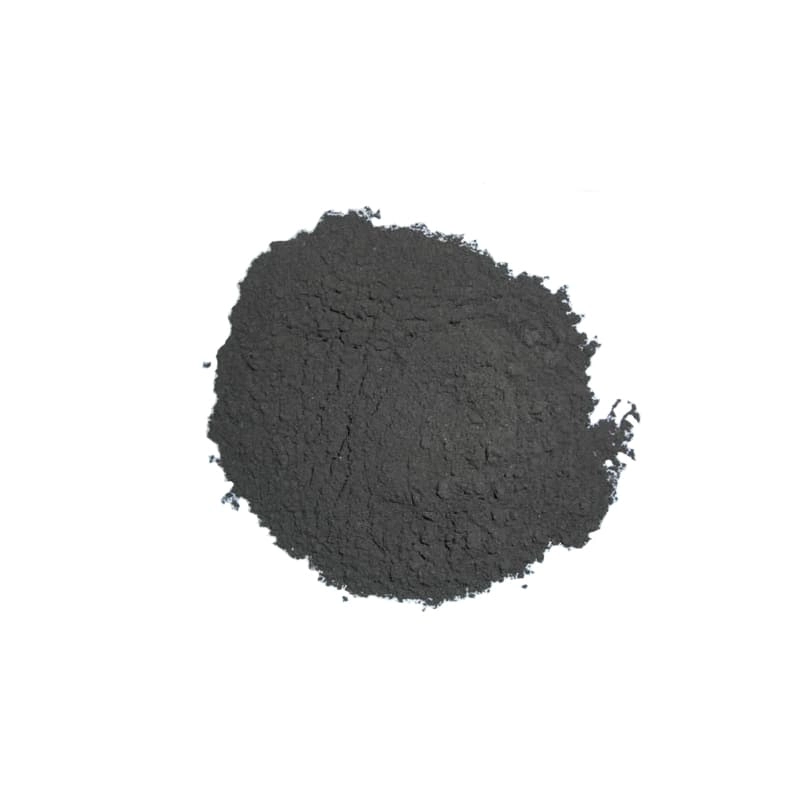
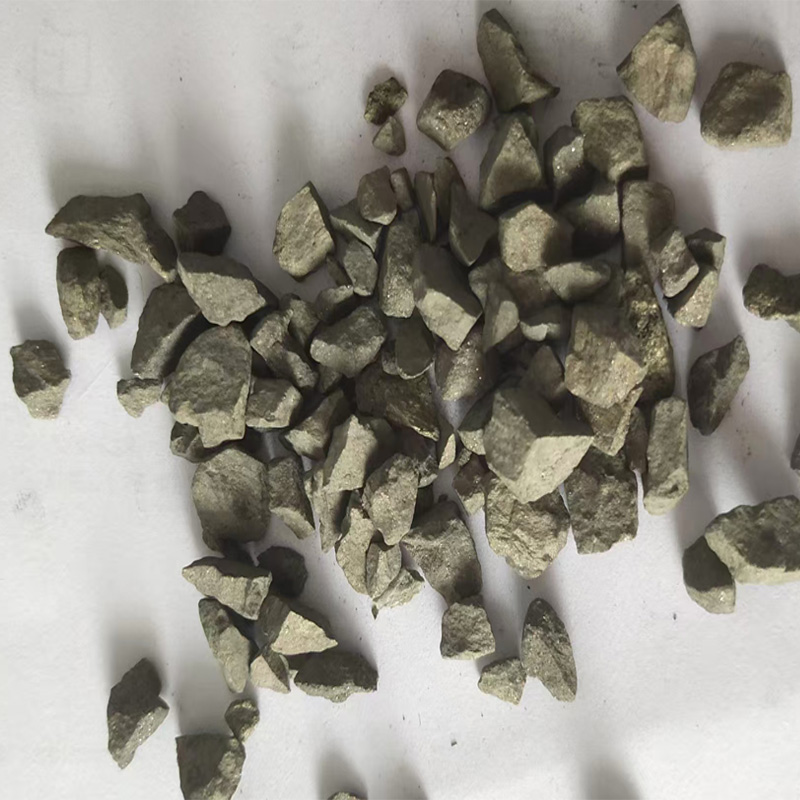
Pyrite (FeS₂), commonly known as “fool’s gold”, has long been overlooked in high-tech fields due to its traditional positioning as an ore for sulfur and iron extraction. However, with the advancement of nanomaterial preparation and semiconductor processing technologies, pyrite powder—especially nanoscale pyrite powder—has emerged as a promising candidate for electronic devices, thanks to its unique optoelectronic, semiconductor and magnetic properties. This article discusses its application cases and technical advantages in electronic components, semiconductors and magnetic storage devices.

1. Application in Electronic Components
1.1 Thin-film Resistors

Thin-film resistors are core passive components in circuit systems, requiring stable resistance value, low temperature coefficient and good corrosion resistance. Pyrite powder can be fabricated into uniform thin films on ceramic substrates via magnetron sputtering or screen printing.
- Application Case: Researchers have developed pyrite-based thin-film resistors for automotive electronic control units (ECUs). These resistors operate stably in the temperature range of -50°C to 150°C, with a temperature coefficient of resistance (TCR) as low as ±50 ppm/°C, which is comparable to commercial nichrome resistors.
- Technical Advantages: Pyrite powder is low-cost and abundant in reserves, which is far cheaper than precious metal materials such as platinum and palladium used in high-precision resistors; the prepared films have compact structure and strong adhesion to substrates, and are not easy to oxidize in harsh environments.
1.2 Piezoelectric Sensors

The piezoelectric effect of pyrite (i.e., generating electric charge under mechanical stress) makes its powder applicable to the preparation of low-power piezoelectric sensors.
- Application Case: In industrial vibration monitoring sensors, pyrite powder is mixed with polymer binders to prepare flexible piezoelectric composite films. These films can convert mechanical vibration signals into electrical signals, and are used for real-time monitoring of mechanical equipment such as motors and pumps.
- Technical Advantages: Compared with traditional piezoelectric materials such as PZT (lead zirconate titanate), pyrite powder is lead-free and environmentally friendly, in line with the EU’s RoHS directive; the composite films have good flexibility and can be attached to irregular surfaces of equipment.
2. Application in Semiconductors
Pyrite has a direct band gap of approximately 0.95 eV, which matches the solar spectrum well, and its carrier mobility is relatively high, making it a potential material for low-cost semiconductor devices.
2.1 Solar Cells

- Application Case: Nanoscale pyrite powder is used as the light-absorbing layer of thin-film solar cells. By optimizing the particle size (10–50 nm) and film preparation process, the photoelectric conversion efficiency (PCE) of lab-scale pyrite solar cells has reached 6.7%. Although it is lower than that of silicon solar cells, it has great potential for cost reduction.
- Technical Advantages: The raw material cost of pyrite is only 1/100 of that of crystalline silicon; the preparation process of pyrite thin films is simple, which can be realized by solution processing (such as spin coating and inkjet printing), and is suitable for large-area roll-to-roll production, reducing manufacturing costs.
2.2 Photodetectors

- Application Case: Pyrite powder is deposited on a silicon substrate to fabricate visible-near-infrared photodetectors. These devices have high responsivity (up to 0.5 A/W at 800 nm) and fast response speed (response time less than 10 ns), and are used in optical communication and image sensing systems.
- Technical Advantages: Pyrite photodetectors have a wide spectral response range (400–1100 nm), covering the visible light and near-infrared bands; they can work at room temperature without cooling systems, reducing the energy consumption and volume of equipment.
3. Application in Magnetic Storage Devices
Although pyrite is not a ferromagnetic material at room temperature, nanoscale pyrite powder exhibits unique superparamagnetic properties, which can be used in high-density magnetic storage media.
3.1 Magnetic Recording Media
- Application Case: By coating pyrite nanopowder on hard disk platters and modifying the surface with magnetic materials, the storage density of hard disks can be improved. Lab tests show that the storage density of pyrite-based magnetic media can reach 1 Tbit/in², which is higher than that of traditional cobalt-chromium-based media.
- Technical Advantages: Pyrite nanopowder has small particle size and uniform dispersion, which can reduce the distance between magnetic domains and improve storage density; its chemical stability is good, and it is not easy to be corroded, which can extend the service life of magnetic storage devices.
3.2 Magnetic Random Access Memory (MRAM)
- Application Case: Pyrite powder is used as the spacer layer material of MRAM devices. It can effectively isolate the ferromagnetic layers and adjust the tunneling magnetoresistance (TMR) effect, thereby improving the read-write speed and stability of MRAM.
- Technical Advantages: Compared with traditional spacer layer materials such as MgO, pyrite powder is easier to prepare into thin films with uniform thickness; MRAM devices based on pyrite have low power consumption and can maintain data storage without power supply, which is suitable for the development of next-generation non-volatile memory.
4. Challenges and Prospects
Despite the obvious technical advantages, the application of pyrite powder in electronic devices still faces challenges, such as the difficulty in controlling the purity of nanoscale pyrite powder (impurities such as pyrrhotite will affect its electrical properties), and the need for further optimization of long-term stability of devices.
In the future, with the breakthroughs in high-purity pyrite powder preparation technology and device structure design, pyrite is expected to be widely used in low-cost solar cells, flexible electronic sensors and high-density magnetic storage devices, becoming a key material for the development of green and low-carbon electronics industry.
Email: c32917930@gmail.com
Whatapp/Wechat/phone:+86 18006417081
Website: https://www.tlbncn.com/
Address:No. 402, Building 9, No. 2899, North Section, Tongdu Avenue, Xihu Town, Tongguan District, Tongling City, Anhui Province